1978: 98 seconds and a sailor lost, the first Route du Rhum
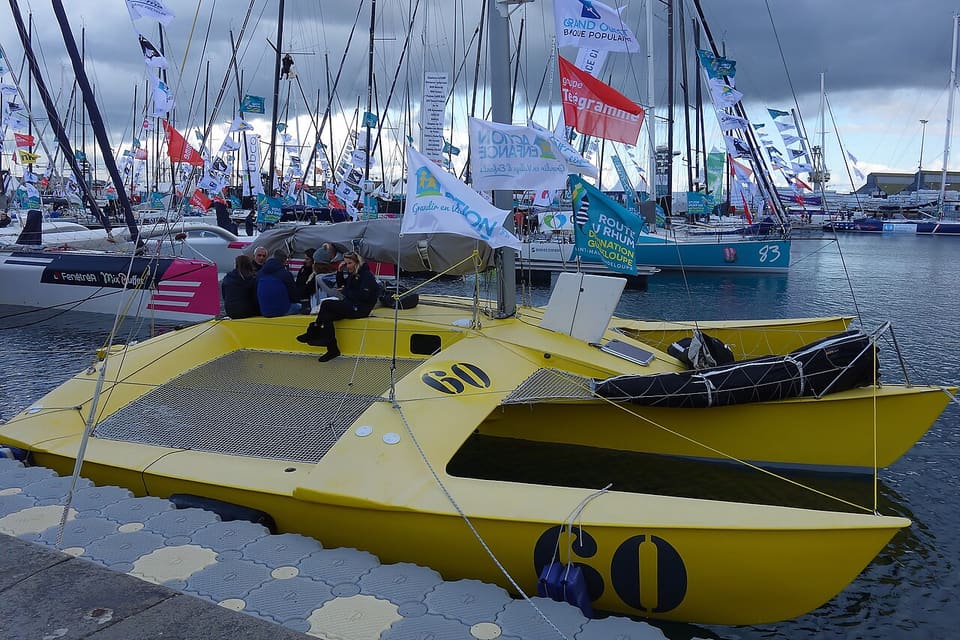
On 5 November 1978, 38 solo sailors left Saint-Malo for Pointe-à-Pitre. It was the first Route du Rhum, and it would become a legend for two opposite reasons: a finish decided by 98 seconds, and a sailor who was never seen again (Wikipedia FR, Route du Rhum 1978).
A race open to all
The event was dreamed up by advertising man Michel Etevenon, together with Guadeloupe's rum producers' association. The rule was simple: a solo, non-stop Atlantic crossing, open to monohulls and multihulls, amateurs and professionals alike, with no size limit.
Large monohulls and trimarans lined up side by side. Among the starters were names that would shape offshore racing: Olivier de Kersauson, Philippe Poupon, Marc Pajot, Bruno Peyron, and a 21-year-old woman, Florence Arthaud, who would finish 11th.
98 seconds after 23 days at sea
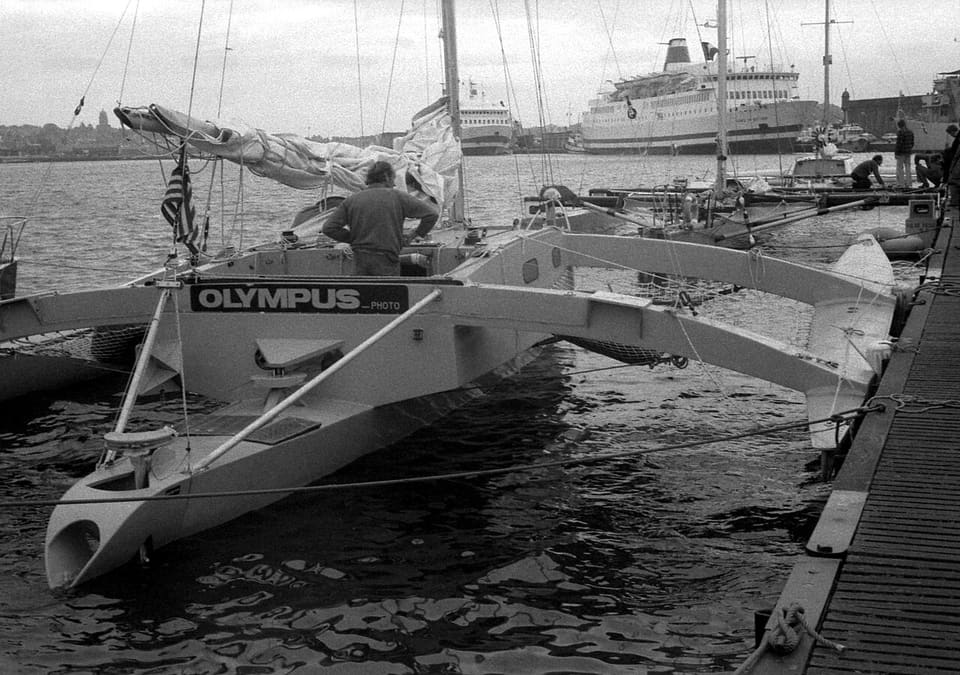
Canadian Mike Birch was sailing Olympus Photo, a small 11.48-metre trimaran. Against him, Michel Malinovsky sailed Kriter V, a 21-metre monohull, almost twice as long. After more than three weeks on the Atlantic, the two boats reached Guadeloupe together.
Birch crossed the line in 23 days 6 hours 59 minutes 35 seconds. Malinovsky followed in 23 days 7 hours 1 minute 13 seconds: a gap of 98 seconds. American Phil Weld took third on the trimaran Rogue Wave, ahead of Olivier de Kersauson (Kriter IV) (Wikipedia, 1978 Route du Rhum).
Beyond the suspense, the result heralded a revolution: a small multihull had beaten a big monohull. Multihulls have taken line honours in every edition since, right up to today's Ultims.
The disappearance of Alain Colas
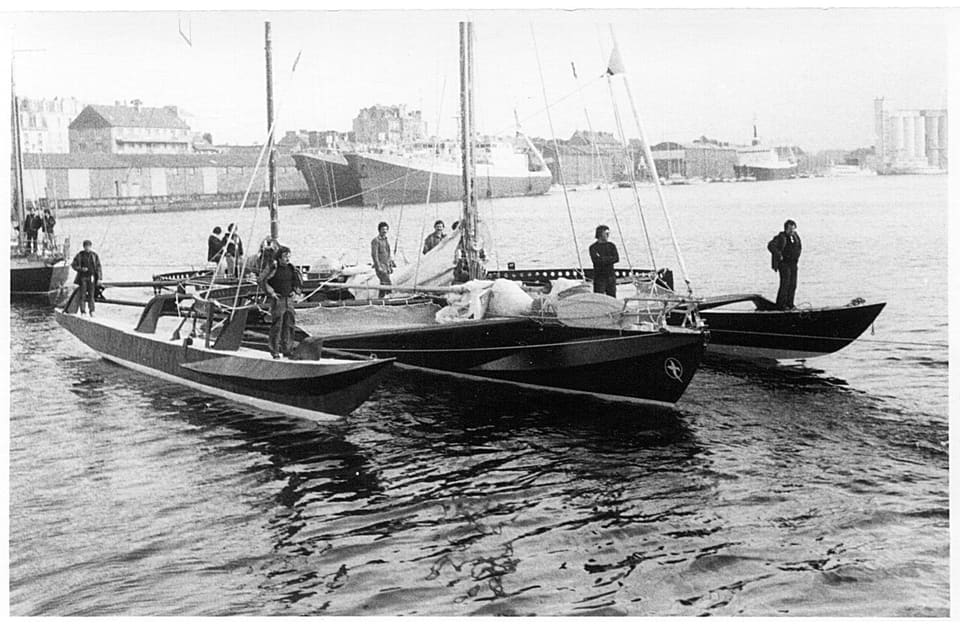
Alain Colas was then one of France's most famous sailors. On Manureva, Éric Tabarly's former Pen Duick IV, which he had bought, he won the Transat anglaise (OSTAR) in 1972, then completed a 169-day solo circumnavigation in 1973-1974, 32 days faster than Francis Chichester (Wikipedia FR, Alain Colas).
In 1978 he was sailing among the leaders. On 16 November, after passing the Azores, he sent a radio message to RMC, his sponsor: "I am in the eye of the cyclone, there is no more sky, everything is a jumble, there are only mountains of water around me." The next call, expected the following day, never came.
The search began around 28 November. Four maritime patrol aircraft covered some 2 million km² over about twenty days and found nothing. The French Ministry of Defence called it off on 27 December 1978. Colas had no distress beacon on board: it had been left on the quay at the start. Neither the sailor nor the trimaran was ever found; a collision with a cargo ship and a failure of the aluminium hull remain the main hypotheses.
The legacy
The Route du Rhum was born of this mix of feat and tragedy, and has kept its spirit: a race every four years, open to professionals and amateurs alike. In 2026 the 13th edition still brings together 32-metre Ultims and vintage boats.
The rest of the story of the race time, from Birch to Caudrelier, is in Route du Rhum: the story of the record. The course is on the globe's Route du Rhum page, and the 2026 edition is presented in Route du Rhum 2026: course, classes, skippers and records.