Route du Rhum: the weather traps from Saint-Malo to Guadeloupe
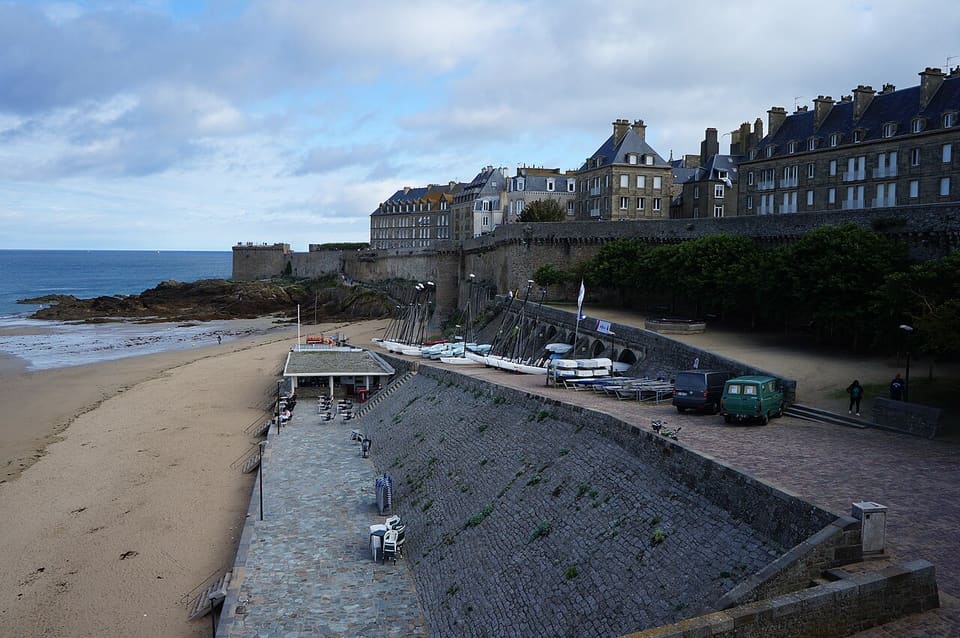
In the Route du Rhum, no mark sets the course between the Cap Fréhel buoy and Guadeloupe. Each skipper picks a route according to the weather, and the weather is what opens the gaps on the tracker. Le Figaro Nautisme interviewed Cyrille Duchesne, head of forecasting at METEO CONSULT, who follows the race with the race management (Figaro Nautisme). Here are the four stages of the course as the meteorologist sees them.
1. The start: November fronts
In early November, depressions and their fronts regularly sweep the Channel and the Bay of Biscay. The dreaded scenario: "violent gusts (50-60 knots) and a sudden wind shift from south-west to north-west". The ocean swell crosses the wind sea, making the first 24 hours especially hard on boats and sailors.
This is not theoretical. In 2022, the start planned for Sunday 6 November was postponed to Wednesday 9 November at 14:15 because of a very disturbed front (Figaro Nautisme, 2022). "For the first time in the Route du Rhum's 44-year history, a start had to be postponed," noted Yacht magazine (Yacht).
2. North or south, and the Azores high
The direct route to the Caribbean passes close to the Azores high, a high-pressure area where the wind dies away at the centre. "The sailors' goal is to avoid crossing the high, since the winds are very light at its centre," explains Cyrille Duchesne. And the high moves: it can stretch towards the Bay of Biscay or retreat towards Madeira or Bermuda. "The whole strategy is to find the 'door'", the gap that lets boats go round it without adding too many miles.
Further north, a "train of depressions" moves from west to east. "Atlantic depressions are both the skippers' greatest allies and their main enemies": they bring wind to go fast, but the most active systems and their crossed seas, which wear boats down, must be avoided. South-westerlies ahead of warm fronts push the boats west, while north-westerlies behind cold fronts help them turn back south.
3. Trade winds and squalls
Once round the south side of the high, the boats reach the trade winds, "known to be steady and moderate". They can still be fickle: they may "die away or reach 40 knots under squalls", and their direction "can vary by about a hundred degrees between north-north-east and south-east".
Squalls are convective clouds that build in the warm, humid tropical air. Under a squall, the wind can go "from 10-15 knots to 35-40 knots in just a few minutes", then drop into a sudden calm. Alone, at night, this is one of the trickiest moments of the race.
4. The finish: around Basse-Terre
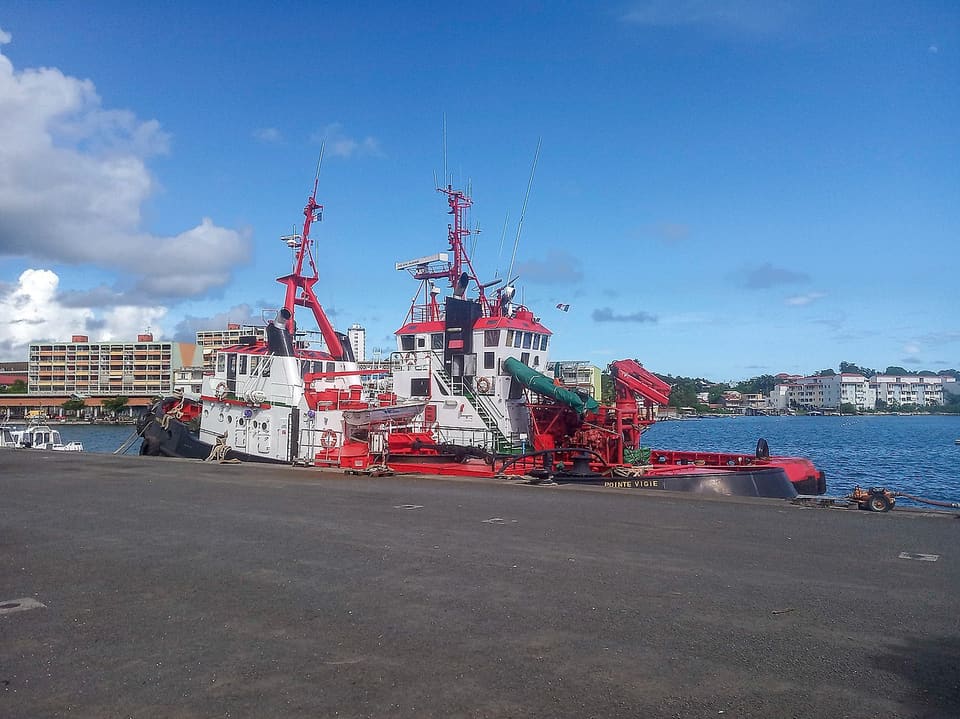
Before crossing the line in Pointe-à-Pitre, the skippers sail around Basse-Terre. "Guadeloupe's terrain, dominated by La Soufrière, strongly disrupts the trade winds": the wind accelerates around the headlands and fades in the island's lee. In those wind shadows a lead can melt away, and a close finish can be decided there.
What to watch on the tracker
- The first 48 hours: who takes the most risk in the Bay of Biscay, and who shelters or makes a pit stop.
- The latitude of the boats as they approach the Azores: a northern group is betting on the depressions, a southern group on the door round the high.
- The final hours around Basse-Terre, where the rankings can still change.
The full course is on the globe's Route du Rhum page. The official tracker, TV coverage and the Virtual Regatta game are covered in how to follow the Route du Rhum 2026, and the best viewpoints for the start in where to watch the start in Saint-Malo.